Bolivia’s Salt Flats Speed Challenge: High-Altitude Racing at 4,000 Meters
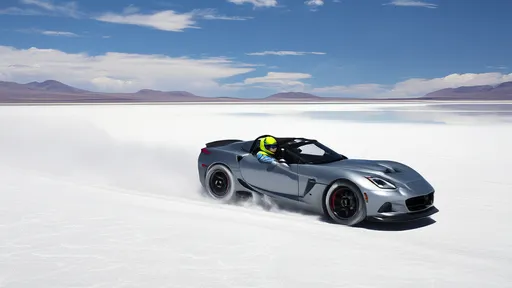
The vast, shimmering expanse of Bolivia’s Salar de Uyuni is more than just a natural wonder—it’s a proving ground for speed. At an altitude of 4,000 meters above sea level, this otherworldly landscape has become the backdrop for one of the most extreme motorsport events in the world. Here, drivers and engineers push the limits of both machine and human endurance, battling thin air, blinding sunlight, and a surface that shifts between glass-smooth flats and treacherous cracks.
The Unforgiving Terrain
Stretching over 10,000 square kilometers, the Salar de Uyuni is the world’s largest salt flat. Its surface, a thick crust of salt, creates a near-perfect natural racetrack during the dry season. But perfection is deceptive. The thin air at this altitude robs engines of oxygen, reducing power output by as much as 30%. Drivers must contend with dizziness and fatigue, while mechanics scramble to adapt engines to the harsh conditions. The blinding white salt reflects sunlight with such intensity that goggles and polarized visors are mandatory—even a few minutes of exposure can lead to temporary blindness.
Despite these challenges, the salt flats have drawn speed enthusiasts for decades. The surface allows vehicles to reach astonishing velocities with minimal resistance, making it an ideal location for land speed record attempts. In recent years, specialized racing events have emerged, pitting modified cars, motorcycles, and even electric vehicles against each other in a battle for high-altitude supremacy.
The Machines Built for the Extreme
Competing on the Salar requires more than just a fast vehicle—it demands engineering ingenuity. Teams arrive with heavily modified machines, often featuring turbocharged or supercharged engines to compensate for the thin air. Tires are another critical consideration; the salt’s abrasive surface can shred conventional rubber in hours, forcing teams to use specially designed treads or even bare metal wheels in some cases.
Electric vehicles have also begun to make their mark on the salt flats. With no need for oxygen to combust fuel, EVs hold a unique advantage at high altitudes. In 2022, a Bolivian team set a new national speed record for electric cars on the Salar, reaching over 300 km/h in a custom-built prototype. Their success has sparked interest among international manufacturers looking to test next-generation battery technology in extreme conditions.
The Human Factor
For drivers, racing at 4,000 meters is as much a physiological challenge as a technical one. The reduced oxygen levels can impair reaction times and decision-making, turning even routine maneuvers into high-stakes gambles. Many competitors spend weeks acclimatizing before events, while others rely on supplemental oxygen systems similar to those used by fighter pilots.
Local Bolivian teams, however, often have the edge. Born and raised in the Altiplano region, their bodies are naturally adapted to the altitude. This home-field advantage has led to surprising upsets, with underfunded local crews occasionally outpacing well-equipped international teams. "The salt doesn’t care about your budget," one veteran driver remarked. "It only respects skill and courage."
A Spectacle Unlike Any Other
Beyond the competition itself, the event has become a cultural phenomenon. Spectators brave the harsh environment to witness the spectacle, camping in nearby villages or even on the salt flats themselves. At night, the surface cools rapidly, creating an eerie silence broken only by the distant hum of engines being fine-tuned for the next day’s runs.
The Bolivian government has taken notice of the event’s growing prestige, offering logistical support and promoting it as a showcase of the country’s unique geography. Environmental concerns remain, however, as the delicate salt crust can take years to recover from tire tracks. Organizers now enforce strict cleanup protocols, ensuring that the racing leaves no permanent scars on this natural wonder.
As the sun sets over the Salar, casting long shadows across the salt, one thing becomes clear: this is more than just a race. It’s a testament to human ambition, a dance between man and machine at the very edge of what’s possible. And at 4,000 meters above sea level, every kilometer per hour feels like a victory against the elements.
By /Jun 15, 2025

By /Jun 15, 2025

By /Jun 15, 2025
By /Jun 15, 2025

By /Jun 15, 2025

By /Jun 15, 2025

By /Jun 15, 2025

By /Jun 15, 2025

By /Jun 15, 2025

By /Jun 15, 2025
By /Jun 15, 2025

By /Jun 15, 2025

By /Jun 15, 2025
By /Jun 15, 2025

By /Jun 15, 2025

By /Jun 15, 2025
By /Jun 15, 2025
