The Land Rover Defender has long been an icon of rugged capability, a vehicle that has carried explorers, farmers, and adventurers across some of the most unforgiving terrain on the planet. For decades, its reputation was built on simplicity and durability, with a chassis-mounted body and leaf-sprung solid axles that could take a beating and keep going. But as the automotive world evolved, so too did the Defender—culminating in a radical shift from its traditional leaf-spring setup to a modern independent suspension system. This transition wasn’t just about keeping up with the times; it was a deliberate reimagining of what a hardcore off-roader could be.
In its earliest iterations, the Defender—then known as the Series Land Rover—relied on heavy-duty leaf springs. These were simple, robust, and easy to repair, making them ideal for remote areas where sophisticated engineering was neither practical nor necessary. The solid axles ensured consistent wheel articulation, a critical factor when crawling over rocks or navigating deep ruts. For generations, this setup defined the Defender’s character. It was unrefined, sometimes punishing on paved roads, but utterly dependable where it mattered most.
Yet, as consumer expectations shifted toward comfort and on-road manners, Land Rover faced a dilemma. How could it modernize the Defender without diluting its off-road prowess? The answer arrived with the 2020 redesign, which abandoned the archaic leaf springs in favor of a fully independent suspension. Purists balked at the change, fearing that the Defender would lose its edge. But Land Rover’s engineers weren’t just chasing smoothness—they were leveraging decades of technological advancement to create something even more capable.
The new independent suspension system, paired with advanced electronic controls, allows each wheel to react independently to terrain changes. Where a solid axle might lift a wheel off the ground over extreme obstacles, the independent setup maintains better contact, improving traction and stability. Air suspension, an available option, further enhances adaptability, automatically adjusting ride height for different conditions. The result is a Defender that feels more composed on highways without sacrificing its legendary off-road performance.
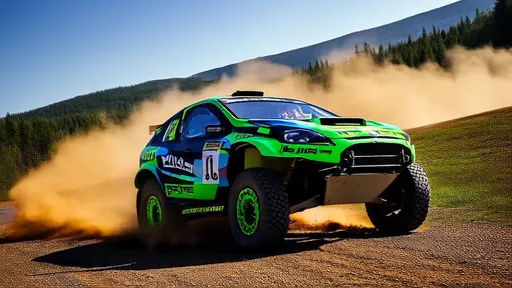
Critics initially questioned whether the move to independent suspension would compromise durability. After all, leaf springs are famously tough, with fewer moving parts to fail. But Land Rover countered this by rigorously testing the new system in extreme environments, from the deserts of Dubai to the frozen trails of Scandinavia. The Defender’s aluminum-intensive architecture also plays a role, offering a lightweight yet rigid foundation that complements the suspension’s precision. Early adopters and off-road enthusiasts have since confirmed that the new setup not only meets but often exceeds the old system’s capabilities.
What’s fascinating about this evolution is how it reflects broader trends in the automotive industry. The original Defender was a tool, designed purely for function. The modern iteration is still a tool—just a far more sophisticated one. By embracing independent suspension, Land Rover hasn’t abandoned the Defender’s heritage; it has redefined it for a new era. The vehicle remains as tough as ever, but now it’s also more versatile, more comfortable, and more technologically advanced. In doing so, the Defender proves that even the most hardcore machines can evolve without losing their soul.
The Defender’s journey from leaf springs to independent suspension is more than just a technical upgrade—it’s a statement about the future of off-roading. As electric powertrains and autonomous systems begin to reshape the industry, the Defender’s transformation serves as a blueprint for balancing innovation with tradition. It’s a reminder that progress doesn’t have to come at the expense of capability. If anything, the new Defender demonstrates that the right kind of evolution can make a legend even greater.
By /Jun 15, 2025
By /Jun 15, 2025

By /Jun 15, 2025
By /Jun 15, 2025
By /Jun 15, 2025
By /Jun 15, 2025

By /Jun 15, 2025

By /Jun 15, 2025
By /Jun 15, 2025

By /Jun 15, 2025
By /Jun 15, 2025

By /Jun 15, 2025

By /Jun 15, 2025
By /Jun 15, 2025

By /Jun 15, 2025
By /Jun 15, 2025
By /Jun 15, 2025
