Revolutionary Entrance: The Ritualistic Trap of Rolls-Royce-Style"

Jun 15, 2025 By

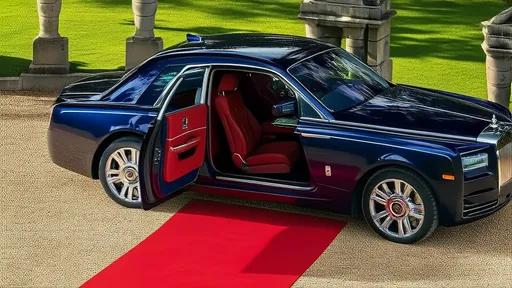
The automotive world has always been obsessed with rituals - those carefully choreographed experiences that transform mere transportation into theater. Among these rituals, few are as visually striking or as psychologically loaded as the rear-hinged "coach doors" that have become synonymous with Rolls-Royce's particular brand of ultra-luxury.

These doors, which open backward like old-fashioned carriage doors, represent more than just an engineering solution. They've become what anthropologists might call a "ritual trap" - an elaborate performance that seduces owners into participating in a very specific kind of wealth display, regardless of whether the feature actually improves functionality.

The theater of entry

Watching someone enter or exit a Rolls-Royce with coach doors is to witness a carefully staged performance. The door opens outward at an angle that creates maximum visibility of the interior. The occupant must then perform a slight pivot - not quite a turn, but a deliberate repositioning that acknowledges the door's unusual geometry. There's an unspoken requirement to pause momentarily in the doorway, allowing onlookers to appreciate both the car and its passenger.

This entire sequence transforms what should be a simple mechanical action into a ceremonial display. Unlike conventional doors that allow for quick, unobserved entry, coach doors demand attention. They turn every arrival and departure into an event, ensuring that neither the car nor its occupants can ever slip quietly into a space.

The weight of history

Rolls-Royce didn't invent rear-hinged doors - they borrowed them from an earlier era when car design still followed horse-drawn carriage conventions. In the early 20th century, many luxury cars featured this design because it allowed passengers to step directly onto the curb rather than into the street. But as automotive design evolved, the practical advantages disappeared while the symbolic value grew.

Today, these doors serve primarily as historical signifiers, connecting modern ultra-luxury with aristocratic traditions. They whisper of a time when servants opened doors for their masters, when stepping into a vehicle was an assisted performance rather than a mundane task. The continued use of this anachronistic feature creates what designers call "heritage friction" - the deliberate preservation of outdated elements to signal continuity with an idealized past.

The psychology of inconvenience

What makes coach doors particularly fascinating is how they weaponize inconvenience. In most product design, engineers strive to eliminate friction - but luxury often operates by different rules. The very awkwardness of these doors becomes part of their appeal, creating what behavioral economists call a "conspicuous waste" signal.

The doors require more space to open than conventional designs. They're heavier and more complex to engineer. They make quick entries and exits impossible. All these "flaws" become features in the context of ultra-luxury, where impracticality serves as proof that the owner can afford to disregard ordinary concerns about efficiency and space.

This creates a psychological trap for owners. Having paid a significant premium for this feature, they find themselves unconsciously performing the rituals the doors demand - the slight pause, the measured movement, the awareness of being observed. The hardware shapes the behavior, creating a feedback loop where the owner becomes both performer and audience in their own status display.

The passenger as prop

Coach doors particularly transform the experience for rear passengers, who become unwitting participants in this theater. Unlike front doors that can be operated independently, rear coach doors typically require assistance - either from a driver, a valet, or at minimum, the front passenger. This recreates the servant-master dynamic of earlier eras, making modern passengers temporarily dependent in ways that highlight their privileged position.

The geometry of the opening also positions rear passengers as displays. As the door swings wide, the interior becomes a stage and the passenger becomes an exhibit - visible to anyone nearby in a way that conventional doors would prevent. This forced visibility creates what sociologists call a "panopticon effect," where passengers modify their behavior in anticipation of being watched, even when no audience is present.

The illusion of exclusivity

Perhaps the most ingenious aspect of the coach door ritual is how it creates an illusion of uniqueness in an era of mass-produced luxury. While Rolls-Royce production numbers have climbed steadily in recent years, the doors maintain a sense of specialness through their performative requirements. No matter how many Phantom sedans roll off the line, the door ritual ensures each arrival feels singular.

This speaks to a fundamental truth about modern luxury: as actual exclusivity becomes harder to maintain (thanks to increased production and global wealth proliferation), brands must create experiential exclusivity through behavior and ritual. The coach door transforms a potentially common object into something that feels rare through the sheer theater of its operation.

The maintenance of mystery

These doors also serve as what magicians call "misdirection" - focusing attention on one dramatic element to distract from more mundane realities. While everyone watches the slow ballet of the doors opening, they're less likely to notice that the underlying platform might share components with more plebeian vehicles, or that the interior switchgear sometimes comes from BMW's parts bin.

This preservation of mystery is crucial in an age when automotive journalists tear apart every new model and forums discuss technical specifications ad nauseam. The door ritual creates a perceptual force field around the vehicle, encouraging observers to engage with the theater rather than the engineering.

The democratization of ritual

Interestingly, we're now seeing this once-exclusive ritual trickle down through the automotive hierarchy. Several Chinese automakers have introduced coach door designs on electric vehicles aimed at the upper-middle class. Lincoln briefly offered rear-hinged doors on its Continental sedan. Even Toyota experimented with the concept on a Japan-only Century model.

This raises fascinating questions about ritual in the modern age. As traditional class signifiers become more fluid, can a ritual maintain its power when separated from its original context? Or does widespread adoption inevitably dilute the very exclusivity that made the ritual meaningful in the first place?

The future of automotive theater

As we move toward autonomous vehicles and electrification, these questions become more pressing. When cars no longer require drivers, when powertrains become homogenized, how will luxury brands differentiate themselves? The answer likely lies in exactly this kind of ritual - in creating experiences that transform transportation into performance.

Rolls-Royce's coach doors offer a case study in how physical design can shape behavior and perception. They demonstrate how an ostensibly functional element can become primarily theatrical, how inconvenience can be rebranded as privilege, and how historical references can be weaponized to create emotional responses that transcend practical considerations.

In an increasingly digital world where so many luxury experiences are becoming virtual or ephemeral, these doors represent something increasingly rare: a physical ritual that can't be replicated online, a status signal that requires actual presence and participation. That may explain their enduring appeal even as the world changes around them.

The true brilliance of the coach door lies not in its mechanics, but in its ability to turn every user into both performer and audience in an endless loop of status affirmation. It's a trap, certainly - but one that luxury consumers seem happy to walk into, again and again.
Recommend Posts
Auto

Jakarta FE Station: Battery Management Extreme Test Under 40°C High Temperature

By /Jun 15, 2025

The Jakarta E-Prix served as a crucible for Formula E's cutting-edge battery technology, pushing teams and manufacturers to their absolute limits under the sweltering 40°C Indonesian sun. As the mercury climbed, so did the stakes – this wasn't just another race on the calendar, but perhaps the most severe real-world test of Gen3 battery systems since the championship's inception.
Auto

The Finnish Flying Man Returns: How Rovanperä Dominates the Rally Gravel Tracks?

By /Jun 15, 2025

The world of rally racing has witnessed many legends, but few have captured the imagination quite like Kalle Rovanperä. The young Finnish driver, often dubbed the "Flying Finn," has redefined what it means to dominate on gravel stages. His ability to blend raw speed with impeccable precision has left competitors and fans alike in awe. But what exactly sets Rovanperä apart on these treacherous surfaces?
Auto

Andretti's Bid to Join: How American Capital is Reshaping the F1 Landscape?

By /Jun 15, 2025

The potential entry of Andretti Global into Formula 1 has sparked intense debate across the motorsport world. Backed by substantial American investment, the bid represents more than just another team joining the grid—it signals a shifting power dynamic in a sport traditionally dominated by European interests. The implications of this move could reshape F1's commercial, competitive, and cultural landscape in ways both subtle and profound.
Auto

Vista Pan VS Leclerc: The Pinnacle Showdown of the New Generation of Racing Kings

By /Jun 15, 2025

The rivalry between Max Verstappen and Charles Leclerc has quickly become one of the most electrifying narratives in modern Formula 1. These two young titans, born just weeks apart in 1997, represent the vanguard of a new era in motorsport—one defined by blistering speed, relentless ambition, and a generational shift in racing philosophy. Their battles on track have already etched themselves into F1 folklore, offering a tantalizing preview of a duel that may define the next decade.
Auto

Domestic Chip Manufacturing: Breakthrough in 28nm Automotive Grade Chips

By /Jun 15, 2025

China's semiconductor industry has achieved a significant milestone with the recent breakthrough in 28nm automotive-grade chips, marking a crucial step forward in the nation's chip localization strategy. The development comes at a time when global supply chain disruptions and technological restrictions have highlighted the importance of self-reliance in critical semiconductor components.
Auto

Revolutionary Entrance: The Ritualistic Trap of Rolls-Royce-Style"

By /Jun 15, 2025

The automotive world has always been obsessed with rituals - those carefully choreographed experiences that transform mere transportation into theater. Among these rituals, few are as visually striking or as psychologically loaded as the rear-hinged "coach doors" that have become synonymous with Rolls-Royce's particular brand of ultra-luxury.
Auto

The Cost of Sun Protection and Structural Safety for Panoramic Skylights

By /Jun 15, 2025

The automotive industry has witnessed a significant shift in design preferences over the past decade, with panoramic sunroofs—or "panoramic sunroofs"—becoming a sought-after feature in modern vehicles. These expansive glass panels, often stretching from the front windshield to the rear of the cabin, promise an airy, open driving experience. However, beneath their aesthetic appeal lies a complex trade-off between comfort, safety, and structural integrity. As consumers increasingly prioritize sleek designs and natural light, automakers are grappling with the challenges of balancing these desires with the practical realities of engineering and occupant protection.
Auto

Solar Skylights: The Math Game That Adds 10km to Your Daily Run

By /Jun 15, 2025

The automotive industry has been buzzing with innovations aimed at improving efficiency and sustainability. Among these, solar-powered sunroofs have emerged as a fascinating concept, promising to extend a vehicle's range by harnessing the power of the sun. The idea seems simple enough: use photovoltaic cells integrated into the sunroof to generate electricity, which then charges the car's battery. But how much of an impact can this technology really have? The claim that a solar sunroof can add 10 kilometers to your daily drive has sparked both excitement and skepticism.
Auto

Intelligent Headlights: Projection Art with Million-Pixel Precision

By /Jun 15, 2025

The automotive lighting industry is undergoing a revolution, and at the heart of this transformation lies the advent of million-pixel smart headlights. These cutting-edge illumination systems are no longer just about visibility—they’re about communication, safety, and even artistry. With the ability to project high-resolution images and adapt to driving conditions in real time, smart headlights are redefining how we interact with the road and the world around us.
Auto

Land Rover Defender: Evolution from Leaf Spring to Independent Suspension for a Rugged Upgrade

By /Jun 15, 2025

The Land Rover Defender has long been an icon of rugged capability, a vehicle that has carried explorers, farmers, and adventurers across some of the most unforgiving terrain on the planet. For decades, its reputation was built on simplicity and durability, with a chassis-mounted body and leaf-sprung solid axles that could take a beating and keep going. But as the automotive world evolved, so too did the Defender—culminating in a radical shift from its traditional leaf-spring setup to a modern independent suspension system. This transition wasn’t just about keeping up with the times; it was a deliberate reimagining of what a hardcore off-roader could be.
Auto

Bolivian Salt Flat Racing: High-Speed at 4,000 Meters Above Sea Level

By /Jun 15, 2025

The vast, shimmering expanse of Bolivia’s Salar de Uyuni is more than just a natural wonder—it’s a proving ground for speed. At an altitude of 4,000 meters above sea level, this otherworldly landscape has become the backdrop for one of the most extreme motorsport events in the world. Here, drivers and engineers push the limits of both machine and human endurance, battling thin air, blinding sunlight, and a surface that shifts between glass-smooth flats and treacherous cracks.
Auto

The Sim Racer's Comeback: From Virtual Track to Real Podium

By /Jun 15, 2025

The roar of engines echoes through the grandstands as the checkered flag waves, but this isn't just another podium finish. The driver stepping out of the cockpit wears a grin that tells a story far removed from traditional racing lore. This is the face of a simulator racer who has defied expectations, transitioning from virtual asphalt to real-world glory.
Auto

Le Mans Champion Champagne Ceremony: Why the Wild Shaking?

By /Jun 15, 2025

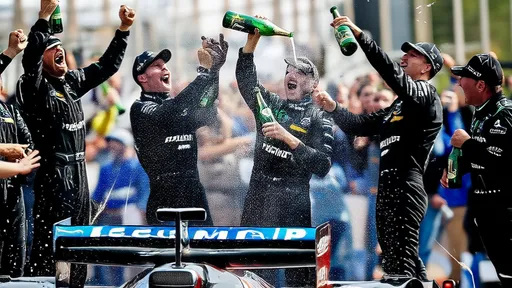
The iconic champagne spray celebration at the 24 Hours of Le Mans represents one of motorsport's most joyous and chaotic traditions. What began as a simple victory toast has evolved into an exuberant ritual where drivers drench each other, team members, and occasionally even officials in bubbling French champagne. The sight of exhausted but elated winners violently shaking bottles before unleashing fizzy torrents has become as much a part of Le Mans lore as the race itself.
Auto

Red Bull Junior Team Rebranding: How Does the Beverage Giant Master Team Marketing?

By /Jun 15, 2025

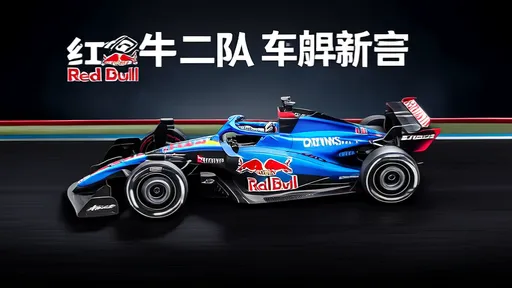
The recent rebranding of AlphaTauri back to its original Toro Rosso identity marks another fascinating chapter in Red Bull's unconventional playbook for motorsport marketing. This strategic shift provides a revealing case study in how an energy drink company has rewritten the rules of sponsorship and brand integration in elite racing.
Auto

Susie Wolff: From F1 Test Driver to FE Team Owner - The Comeback

By /Jun 15, 2025

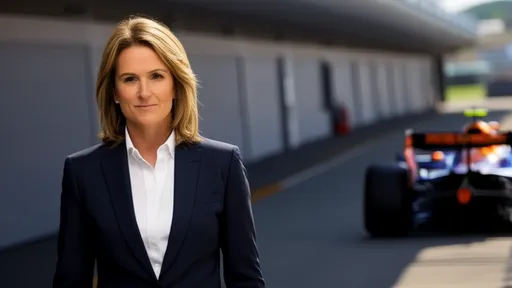
In the high-octane world of motorsport, few stories are as compelling as that of Susie Wolff. From her early days as a Formula 1 test driver to her current role as a team principal in Formula E, Wolff’s journey is a testament to resilience, ambition, and an unyielding passion for racing. Her career trajectory defies the norms of a male-dominated industry, proving that talent and determination can break barriers.
Auto

Silk Road Rally: An Epic Journey from Xi'an to Almaty

By /Jun 15, 2025

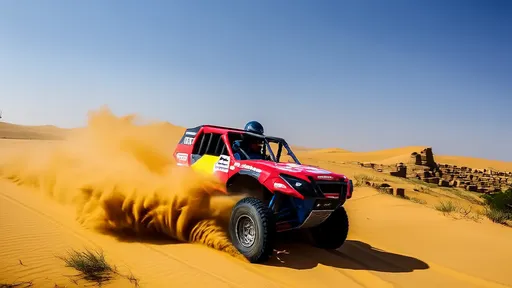
The Silk Road Rally, an extraordinary motorsport event, has once again captured the imagination of adventurers and racing enthusiasts alike. This year's edition, stretching from the ancient city of Xi'an in China to the vibrant metropolis of Almaty in Kazakhstan, promises to be a breathtaking journey through history, culture, and some of the most challenging terrains on the planet.
Auto

How Can Amateur Cyclists Compete with Factory Teams in the GTWC Europe Cup?

By /Jun 15, 2025

The GT World Challenge Europe is one of the most prestigious endurance racing series in the world, featuring top-tier manufacturer teams with factory-backed drivers and cutting-edge machinery. Yet, what makes this championship truly unique is the presence of amateur drivers competing on the same grid as seasoned professionals. The blend of factory teams and gentlemen racers creates a dynamic and unpredictable racing environment, where skill, strategy, and sometimes sheer determination bridge the gap between the two worlds.