The Return of the Flying Finn: How Kalle Rovanperä Dominates Gravel Stages
The world of rally racing has witnessed many legends, but few have captured the imagination quite like Kalle Rovanperä. The young Finnish driver, often dubbed the "Flying Finn," has redefined what it means to dominate on gravel stages. His ability to blend raw speed with impeccable precision has left competitors and fans alike in awe. But what exactly sets Rovanperä apart on these treacherous surfaces?
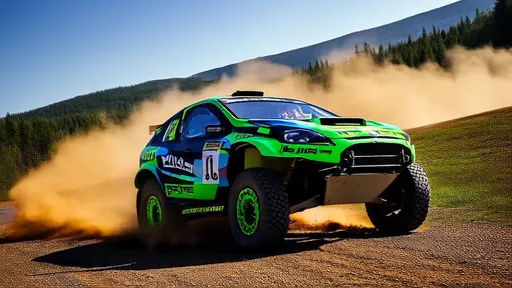
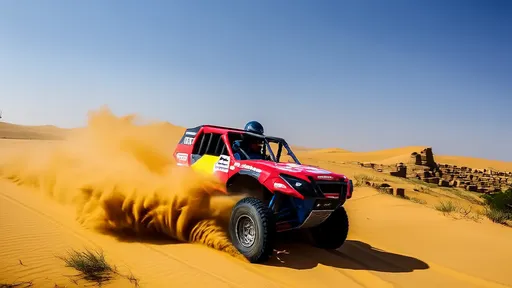
Gravel stages are often considered the great equalizer in rally racing. The loose surface demands a unique combination of aggression and finesse, where even the slightest mistake can send a car careening off the road. Yet, Rovanperä seems to thrive where others struggle. His performances on gravel have become the stuff of legend, with victories that seem almost effortless.
One of the key factors behind Rovanperä's success is his innate understanding of car control. Growing up in Finland, a country known for its rally heritage and challenging gravel roads, he honed his skills from a young age. The Finnish rally culture emphasizes car control in low-grip conditions, and Rovanperä has taken those lessons to heart. His ability to feel the car's movements and adjust his driving in real-time is unparalleled.
Another aspect of his dominance lies in his mental approach. Rally racing is as much a mental game as it is a physical one, and Rovanperä's calm demeanor under pressure sets him apart. While other drivers might falter when pushing the limits on gravel, he maintains an almost zen-like focus. This mental toughness allows him to commit fully to high-speed corners and tricky sections where others might hesitate.
The synergy between Rovanperä and his co-driver, Jonne Halttunen, cannot be overlooked either. Their communication is seamless, with Halttunen's precise pace notes giving Rovanperä the confidence to attack every stage. This trust is especially critical on gravel, where conditions can change rapidly, and split-second decisions make all the difference.
Technical mastery also plays a significant role. Rovanperä's ability to adapt his driving style to different gravel conditions—whether it's the deep ruts of Estonia or the rocky roads of Greece—showcases his versatility. He understands how to modulate throttle input, manage weight transfer, and use the terrain to his advantage. This adaptability is a hallmark of his gravel-stage dominance.
Then there's the matter of sheer bravery. Gravel stages often require drivers to take calculated risks, and Rovanperä has shown time and again that he’s willing to push the envelope. His commitment to high-speed slides and late braking points is a sight to behold. Yet, it’s never reckless; every move is calculated, every risk assessed. This balance between aggression and control is what makes him nearly unbeatable on loose surfaces.
The influence of his team, Toyota Gazoo Racing, cannot be understated. The Toyota Yaris WRC has proven to be a formidable machine on gravel, and the team’s meticulous preparation ensures that Rovanperä has the best possible equipment beneath him. From suspension tuning to tire selection, every detail is optimized for gravel performance. This technical backing allows Rovanperä to focus solely on driving at the limit.
What’s perhaps most impressive is Rovanperä's consistency. While other drivers might have flashes of brilliance on gravel, he delivers top-tier performances stage after stage, rally after rally. This consistency has cemented his reputation as the modern master of gravel. Whether it’s a short super special or a marathon 30-kilometer stage, he finds a way to excel.
As the rally world looks ahead, one thing is clear: Kalle Rovanperä’s reign on gravel shows no signs of slowing down. His combination of skill, mental fortitude, and technical support makes him a force to be reckoned with. For fans of the sport, watching the Flying Finn carve through gravel stages is nothing short of poetry in motion. And for his competitors, the challenge remains—how do you beat a driver who seems to defy the limits of what’s possible on loose surfaces?
The answer, at least for now, is simple: you don’t.
By /Jun 15, 2025
By /Jun 15, 2025

By /Jun 15, 2025
By /Jun 15, 2025

By /Jun 15, 2025

By /Jun 15, 2025

By /Jun 15, 2025

By /Jun 15, 2025

By /Jun 15, 2025

By /Jun 15, 2025
By /Jun 15, 2025

By /Jun 15, 2025
By /Jun 15, 2025

By /Jun 15, 2025

By /Jun 15, 2025
By /Jun 15, 2025
By /Jun 15, 2025
